- +91 9629449633
- dr.ishu.physio@gmail.com
- 10:30AM-2:30PM | 6:00PM to 7:30PM
SVR Lane, Ooty
Monday – Saturday10:30AM - 2:30PM
Kempa Gowda Theatre Complex, Ooty
Monday – Saturday6PM - 7:30PM
SundayClosed
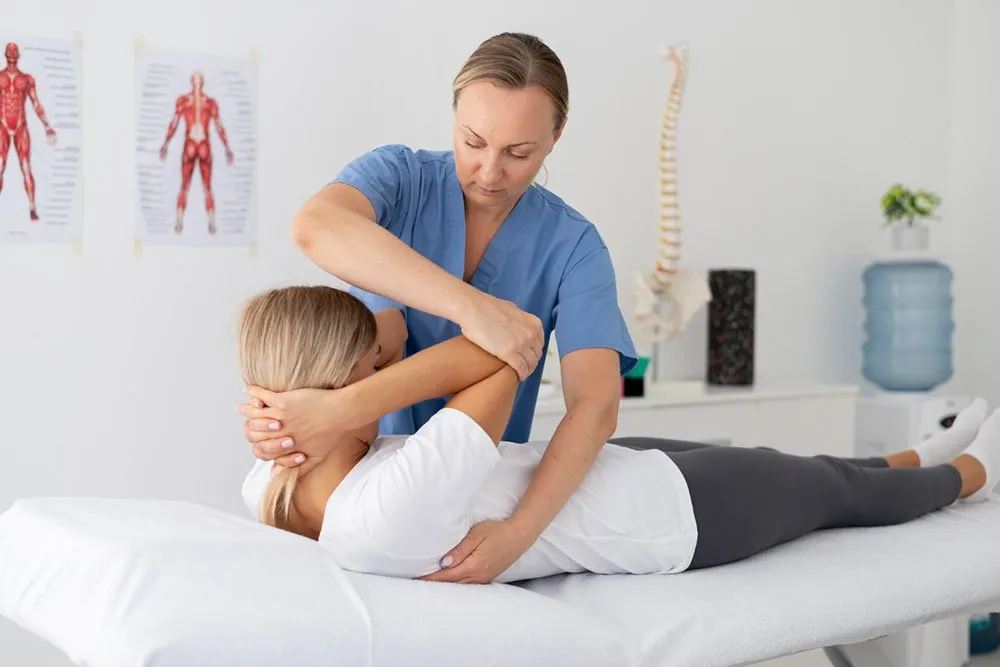
The Fascial Distortion Model is a hands-on treatment approach that targets the fascia — the connective tissue web surrounding muscles, joints and organs — rather than just the muscle or joint itself. When fascia becomes distorted through injury, overuse or strain, it can cause pain, restricted movement and altered posture even when scans show nothing structurally wrong.
Using specific manual techniques developed in Germany, we identify and correct these fascial distortions directly, often producing rapid relief in mobility and pain where other treatments haven’t fully resolved the issue.

Chiropractic is frequently used alongside physiotherapy, osteopathy and fascial manipulation for conditions like lower back pain, cervical pain, postural correction, scoliosis and joint instability.
Targeted manual correction of fascial distortions affecting movement and pain
Often paired with Chiropractic or Osteopathy for faster, longer-lasting results
Addresses fascial restrictions that may be the underlying reason other treatments haven't fully worked
Fascial Distortion Model treatment goes straight to a layer of the body that’s often overlooked — the fascia — correcting distortions that standard muscle or joint-focused treatment can miss. It’s especially effective when paired with our chiropractic or osteopathy care for a more complete resolution.
FDM specifically targets distortions in the fascia itself, using precise manual techniques rather than general muscle-focused massage — it's designed to address root-level restrictions in the connective tissue.
Yes — it's often used for persistent pain and restricted movement, especially cases that haven't fully responded to other treatments.
Yes, and it often is — combining fascial correction with chiropractic or osteopathic adjustment tends to produce faster and more lasting results.
A brief statement outlining the purpose and mission of the clinic. This can include the commitment to patient care, community health, and any specific goals or values. Specify the types of medical services provided
WhatsApp us